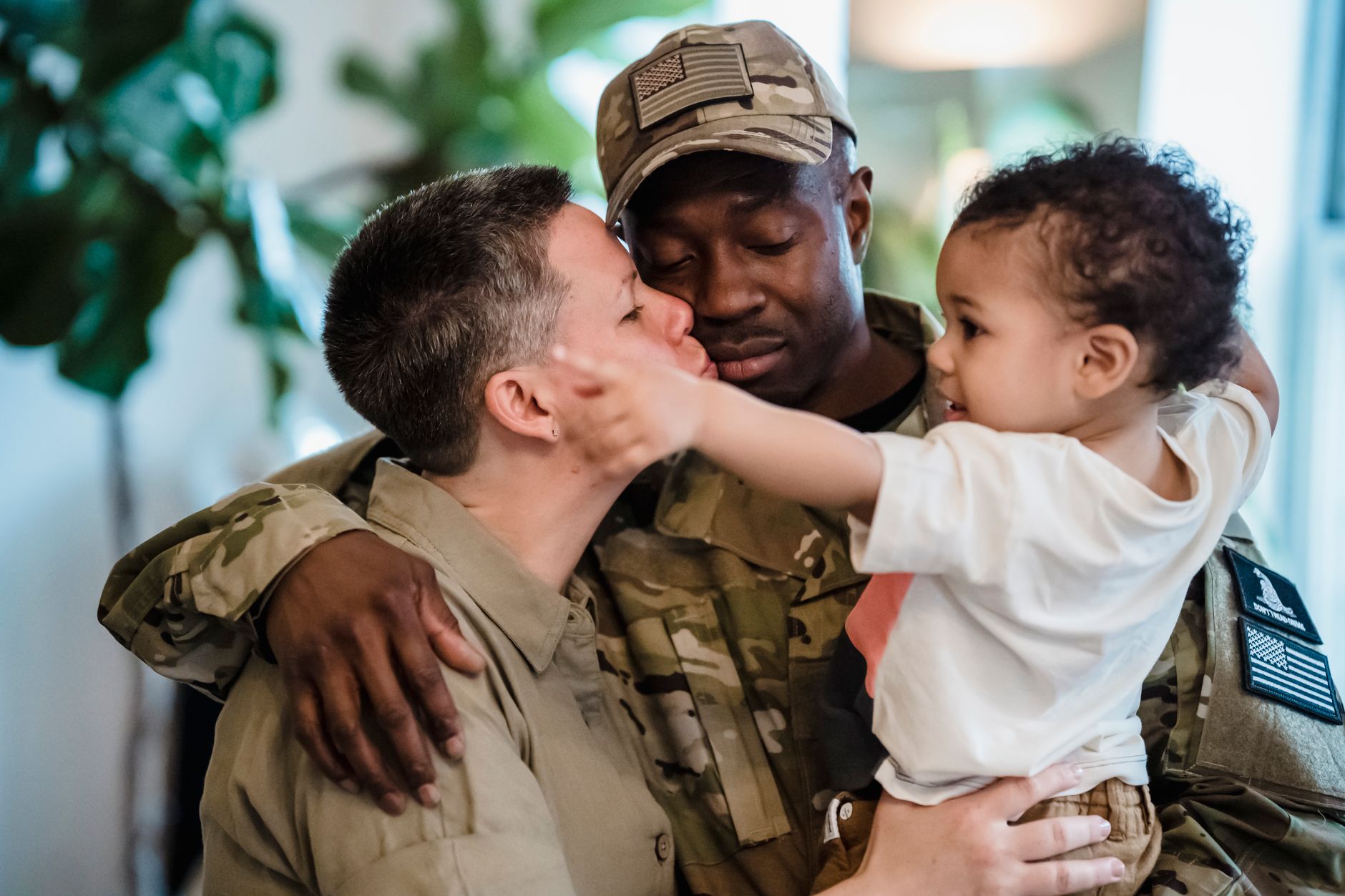
TL;DR: Military leave for new parents is 12 weeks, paid, and standardized across every branch under a DoD-wide policy that took effect January 4, 2023. Birth mothers also get separate convalescent leave (typically six weeks) to recover physically, on top of the 12 weeks of parental leave. There's no more "primary" versus "secondary" caregiver split, a soldier, sailor, airman, Marine, or Guardian gets the same 12 weeks whether they gave birth, adopted, or are the non-birth parent.
If you're active duty and just had a baby or finalized an adoption, you've probably heard three different numbers from three different people, and none of them agree. That's because military parental leave changed substantially in 2023, and a lot of the advice floating around still describes the old rules. This guide covers what's actually in effect right now: the DoD-wide policy that applies to every branch, where Army, Navy, and Air Force implementation differs in the details, how convalescent leave and dual-military households work, and how this is completely separate from FMLA leave for military family members.
DoD-Wide Parental Leave Policy
Military parental leave is governed by DoD Instruction 1327.06, which sets leave and liberty policy for the entire Department of Defense. Each branch publishes its own implementing guidance, but the core entitlement is identical everywhere.
Here's the current structure:
12 weeks of parental leave for every eligible service member, birth parent, non-birth parent, adoptive parent, or foster parent, to be used within one year of the birth, adoption, or foster placement.
Maternity convalescent leave, separate from the 12 weeks, for physical recovery after childbirth. This is typically six weeks (42 days) of non-chargeable leave, and a medical provider can recommend more in writing if there's a documented complication.
Full pay and allowances continue during both types of leave, this isn't unpaid leave like civilian FMLA, and it doesn't come out of a service member's regular leave balance.
Leave can be taken in increments, not necessarily all at once, subject to commander approval on timing.
This wasn't always the setup. Before 2023, the system split parents into two tiers: a "primary caregiver" (usually the birth mother, or whoever the couple designated) got six weeks of primary caregiver leave stacked on top of convalescent leave, while the "secondary caregiver" got far less, as little as two weeks in the Navy and Marine Corps, three weeks in the Army and Air Force. The FY2022 National Defense Authorization Act directed the Pentagon to fix that gap, and the expanded 12-week benefit for both primary and secondary caregivers went into effect a year later. Then DoD went further: instead of keeping a primary/secondary distinction at 12 weeks each, it eliminated the caregiver-designation system entirely. Every parent now gets the same 12 weeks, full stop.
Who's eligible: Active-component service members qualify automatically. For the Reserve and National Guard, eligibility runs through Active Guard and Reserve (AGR) status, Full-Time National Guard Duty (FTNGD), or a call to active service for a period exceeding 12 months. Guard and Reserve members on shorter orders have historically had a gap in coverage here, and it's been a point of ongoing advocacy in Congress, if you're a traditional drilling Guard or Reserve member, check with your unit's admin section on exactly what you qualify for before you assume the same 12 weeks applies.
Branch-Specific Notes
The 12-week entitlement itself doesn't vary by branch, that's the point of the DoD-wide policy. What varies is the administrative layer each service builds on top of it.
Army: Implementation runs through Army Regulation 600-8-10 and is tracked on the official Army benefits site). Soldiers coordinate leave dates through their unit, and convalescent leave is certified by a military medical provider before the 12-week clock starts for birth mothers.
Navy and Marine Corps: Before the 2023 standardization, sailors and Marines had the shortest secondary caregiver leave of any branch, two weeks, versus three in the Army and Air Force. That gap is gone now that everyone gets 12 weeks, but shipboard and deployment-cycle timing still shapes when leave actually gets scheduled; a command may need to sequence leave around a ship's operational schedule in a way a desk-bound Air Force unit doesn't.
Air Force and Space Force: The Air Force publishes its own guidance through myAirForceBenefits), and Space Force Guardians follow the same Department of the Air Force implementation since Space Force doesn't maintain a separate personnel leave regulation.
Coast Guard: Because the Coast Guard sits under the Department of Homeland Security rather than DoD outside of wartime, it follows its own parallel policy rather than DoDI 1327.06 directly, but Coast Guard leadership has aligned its parental leave benefit with the same 12-week structure.
If you're trying to nail down an exact figure specific to your situation, deployment status, a medical complication, an unusual custody arrangement, don't rely on a blog post. Your branch's personnel office or JAG will have the current, unit-level answer, because implementing guidance gets updated more often than most people realize.
Dual-Military Couples
When both parents are service members, each one gets their own full 12-week entitlement, it's not split or shared. A dual-military couple can take their leave concurrently (both home with the baby at once), sequentially (one after the other, extending the total time someone's home), or overlapping in some combination. The only real constraint is that leave isn't transferable between spouses: if one parent doesn't use their full 12 weeks, the other can't claim the difference. Commanders still approve the specific dates, largely to manage unit staffing and deployment schedules, but the entitlement itself can't be denied.
How This Differs From FMLA Military Family Leave
This is where a lot of confusion sets in, because "military leave" gets used to describe two entirely different benefits.
Everything above (the 12 weeks of parental leave) is for the service member themselves after they have or adopt a child. It's a Department of Defense personnel benefit, paid, and has nothing to do with FMLA.
Separately, federal FMLA law includes special provisions for the family members of a service member, a spouse, parent, or child of someone on active duty. Our military family leave guide covers those provisions in detail: FMLA qualifying exigency leave (up to 12 weeks for family members to handle deployment-related matters like childcare arrangements, financial and legal issues, or short-notice deployment) and FMLA military caregiver leave (up to 26 weeks to care for a service member with a serious injury or illness). Those are unpaid, job-protected leave under civilian employment law, the opposite of the paid, DoD-administered parental leave described here.
If you're a military spouse whose civilian employer needs to understand qualifying exigency leave, that's the page you want. If you're the service member who just became a parent, the 12-week policy above is yours. And if you're trying to figure out how military parental leave compares to what civilian new parents get, our maternity leave and paternity leave guides break down FMLA and state paid-leave programs, worth a look since military parental leave is actually more generous than what most civilian new parents receive under FMLA eligibility rules alone.
Frequently Asked Questions
How many weeks is military maternity leave?
A birth mother gets convalescent leave for physical recovery, typically six weeks, extendable if a medical provider documents a complication, plus the standard 12 weeks of parental leave. Those two run separately, so a birth parent's total time off is usually convalescent leave followed by the 12-week entitlement, not 12 weeks total.
Does the military offer paternity leave?
Yes, though the term "paternity leave" isn't used in current policy. Non-birth parents, including fathers, get the same 12 weeks of parental leave as birth parents. That's a major change from the pre-2023 system, when non-birth parents got as little as two weeks depending on the branch.
Is military parental leave paid?
Yes. Service members continue receiving full pay and allowances (including BAH and BAS) during parental leave. This is a fundamental difference from civilian FMLA leave, which is unpaid unless an employer separately offers paid parental leave or the employee is in a state with a paid family leave program.
Do Army, Navy, and Air Force parental leave policies differ?
Not in the core entitlement, all branches provide 12 weeks under the same DoD-wide policy. The differences are administrative: which regulation implements it, how convalescent leave gets certified, and how deployment or shipboard schedules affect when leave is actually taken.
Can Reserve and National Guard members take military parental leave?
It depends on their duty status. Members on Active Guard and Reserve (AGR) status, Full-Time National Guard Duty, or orders exceeding 12 months are eligible for the full benefit. Traditional drilling Guard and Reserve members on shorter orders have a narrower path to this leave, and it's an area where advocacy groups have pushed Congress for parity with active-duty troops.
Is this the same as FMLA leave for military families?
No. Military parental leave is a paid DoD benefit for the service member who had or adopted a child. FMLA's qualifying exigency and military caregiver provisions are unpaid, job-protected leave for the family members of a service member on active duty, administered under civilian employment law rather than military personnel policy. See our military family leave guide for that separate topic.
Does military parental leave apply to adoption and foster placements, or only births?
It covers all of them. The 12-week entitlement applies equally to birth parents, non-birth parents, adoptive parents, and foster parents, and it must be used within one year of the birth, adoption, or foster placement. Convalescent leave is the one piece that's birth-specific, since it exists for physical recovery from childbirth rather than to bond with a new child.
Does military parental leave come out of a service member's regular leave balance?
No. The 12 weeks of parental leave and convalescent leave are separate from a service member's normal accrued leave balance, and full pay and allowances continue throughout. That's a key difference from civilian FMLA, which is unpaid and doesn't come with any leave-balance protection at all.
Can service members take their 12 weeks of parental leave all at once, or split it up?
It doesn't have to be used in one continuous block. The policy allows leave to be taken in increments, though the specific timing needs commander approval to help manage unit staffing and deployment schedules. That flexibility matters most for dual-military households or anyone whose operational schedule doesn't line up neatly with a single 12-week window.
What happens when both parents in a couple are service members?
Each parent gets their own full 12-week entitlement, it isn't split or shared between them. A dual-military couple can take their leave concurrently, sequentially, or with some overlap, but it isn't transferable, so one spouse can't claim any unused portion of the other's leave. Commanders still approve the specific dates on each side, mainly to manage staffing and deployment schedules, but the entitlement itself can't be denied.
Is Space Force parental leave the same as Air Force parental leave?
Yes. Space Force doesn't maintain its own separate personnel leave regulation, so Guardians follow the same Department of the Air Force implementing guidance, published through myAirForceBenefits, that Air Force service members use. The underlying 12-week entitlement is identical across both. Space Force just doesn't have a distinct regulation of its own to point to.
How does military parental leave compare to civilian maternity or paternity leave?
It's generally more generous. Military parental leave is 12 weeks, paid in full, and available DoD-wide, while civilian FMLA only guarantees unpaid, job-protected leave, and whether a civilian new parent gets paid leave at all depends on their employer or a state paid-family-leave program. Our maternity leave and paternity leave guides break down how those civilian programs work, and our FMLA eligibility guide covers the baseline federal protections that apply outside the military.